Intro
I designed and built Maxxmod, a browser extension that gives users more control over their YouTube experience by reducing distractions, simplifying the interface, and adding features the platform doesn’t offer.
This case study follows the journey from the initial idea and research to product design, development, and the launch of Maxxmod 1.0.
Maxxmod 1.0: Demo and Journey
The video below covers the full story presented in this case study and goes further into how I completed and launched Maxxmod with Codex, a part of the journey only briefly covered here.
Context
After more than a decade working as a UX and Product Designer for clients, in November 2025 I decided to build my first independent product.
As a heavy YouTube user, I constantly encountered limitations in the platform and friction caused by fragmented browser extensions with poor UX or lack of maintenance.
This led to the idea of creating a single, well designed extension that could consolidate and improve the experience.
Where the idea started ✨
I explored multiple ideas across browser extensions, apps, and different domains on a “Product ideas” whiteboard. After comparing them, I chose Maxxmod as the product to build.
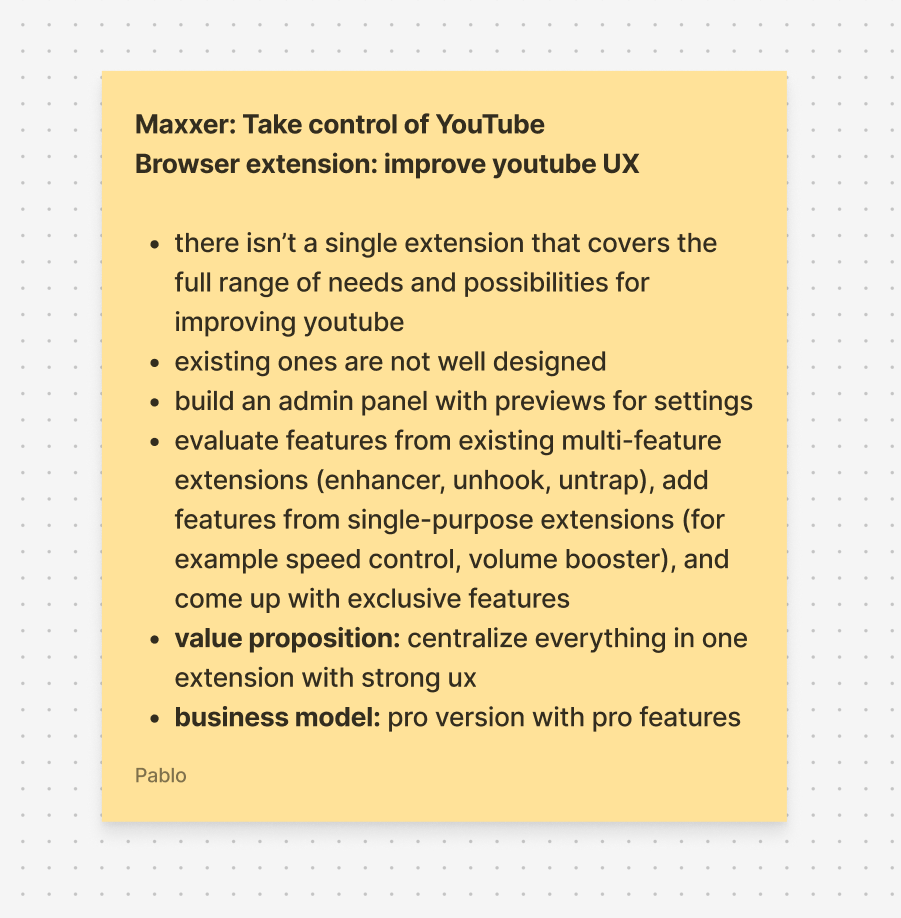
The following is a screenshot of the original sticky note for Maxxmod, translated from Spanish. The product was initially called Maxxer.
Opportunity
At the time of my research, the YouTube extension ecosystem was:
- Fragmented across many tools
- Inconsistent in UX and interaction patterns
- Often poorly maintained or abandoned
- Focused on toggles rather than product experience
Despite these limitations, my research indicated strong demand, with more than 5 million users across YouTube-related browser extensions.
This creates an opportunity for a more cohesive, scalable, and user centered solution.
Research
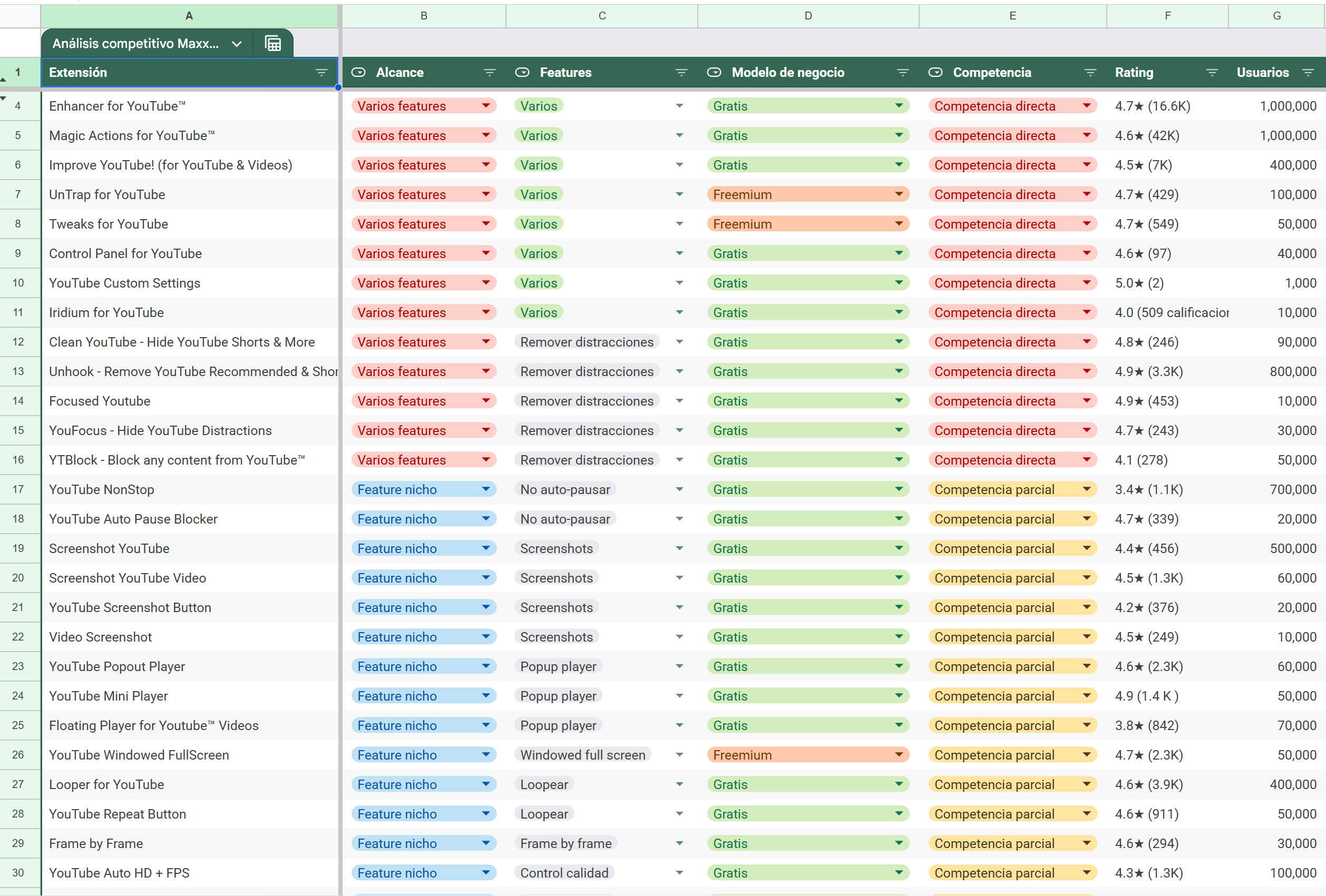
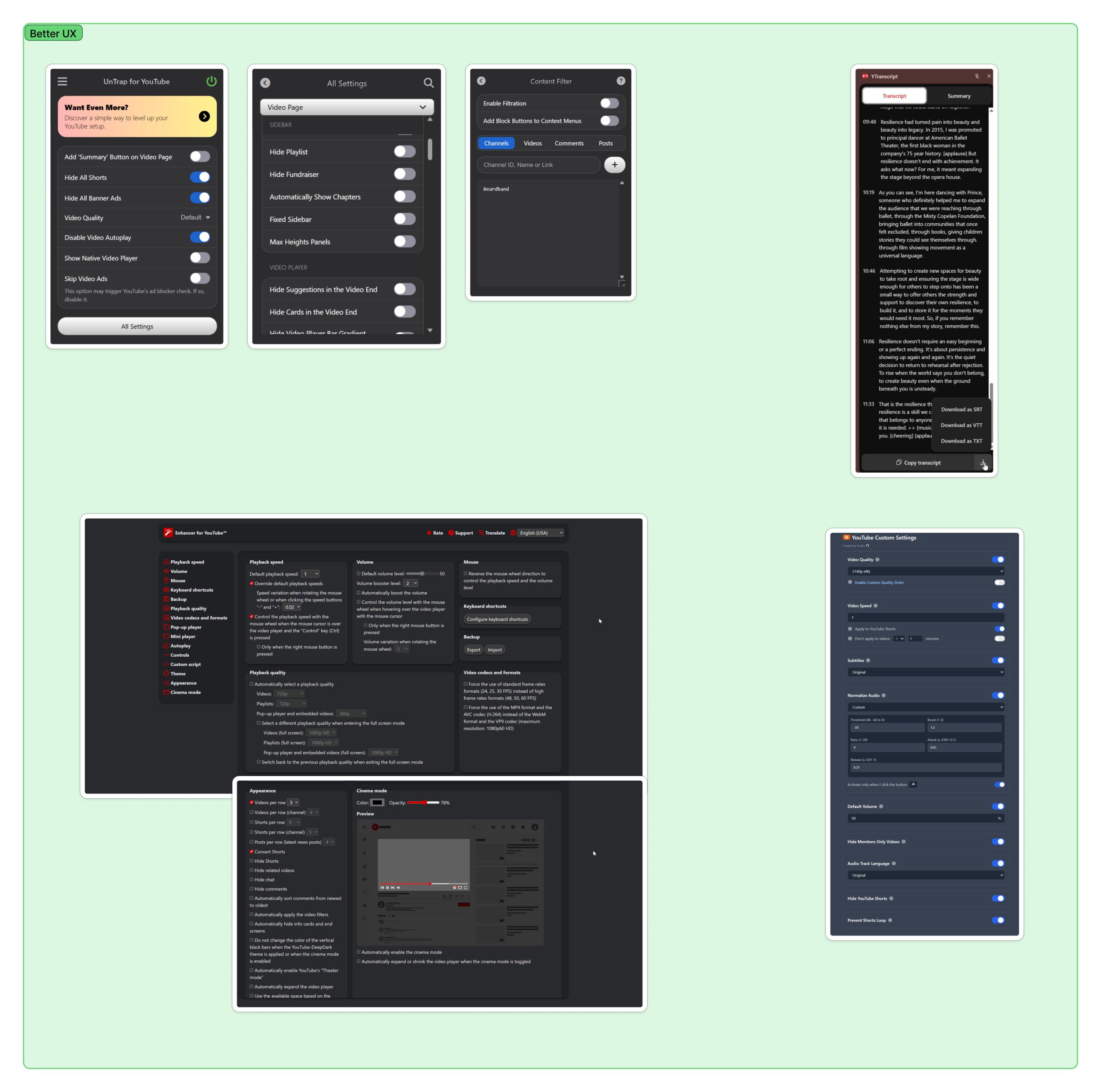
I analyzed more than 90 extensions across different segments of the space, including products with strong UX, large user bases, niche single-purpose tools, lesser-known alternatives, and direct competitors offering extensive feature sets.
The main direct, multi-feature competitors analyzed included the following, with user counts recorded at the time of the research:
- Enhancer for YouTube (1M users)
- Unhook (800K users)
- Improve YouTube (400K users)
- UnTrap (100K users)
- Tweaks for YouTube (50K users)
- Control Panel for YouTube (40K users)
Key findings
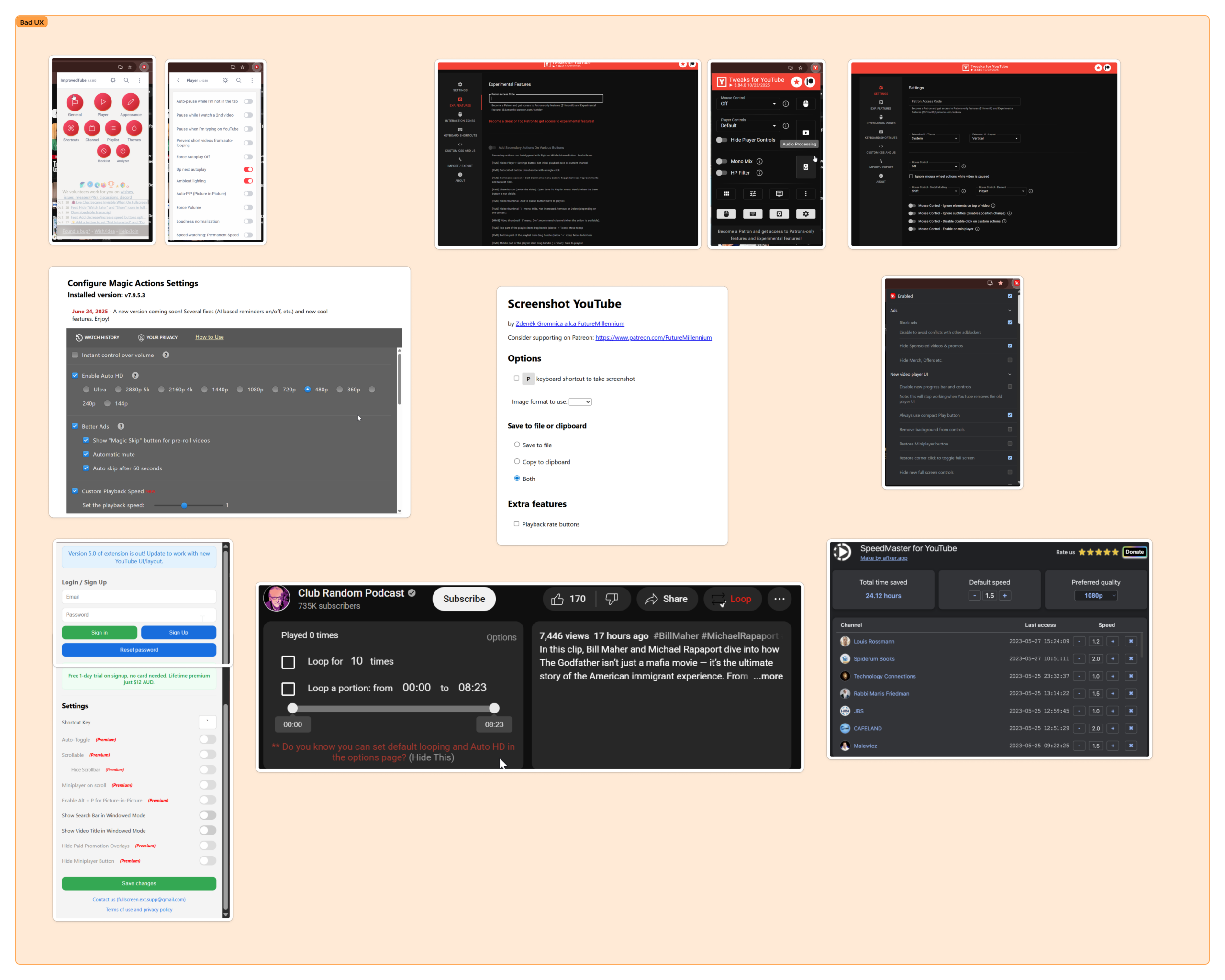
- Most extensions rely on long lists of toggles with little structure
- Limited UX thinking behind feature grouping and discoverability
- Lack of visual previews or guidance
- No clear product direction or long term evolution
Product definition
The original product vision brought together
- 150+ existing features from the ecosystem, many improved and refined
- 50+ original features unique to Maxxmod
Core principles
- Structured control instead of toggle overload
- Preview driven settings (users see changes before applying)
- Modular and scalable architecture
- Focus on usability and clarity
Initial launch plan
- Local first extension (no login or backend required)
- Google Chrome as first platform
- Free tier first, Pro planned for a later phase
Early pitch materials
As part of an early attempt to explore funding options, I created two short videos, an intro and a demo, to explain the concept, product direction, and value proposition. These materials were produced when the project was still called Maxxer, before the final naming and UI system were completed.
The fundraising effort did not move forward, and I ultimately chose to continue by bootstrapping the project.
Show early pitch videos
Both videos are in Spanish
Intro
Demo
Design
Naming and logo

The name Maxxmod combines the ideas of maximizing and modifying, which reflects the product’s goal of expanding YouTube’s capabilities and giving users more control.
The flame logo with a play symbol inside was designed to be simple and eye catching.
The palette is intentionally restrained, built around dark gray and white tones to bring calm and clarity to an interface that is text heavy, feature rich, and spread across many screens.
UX direction
The main challenge was turning a large set of features into a clear and usable system.
Key decisions
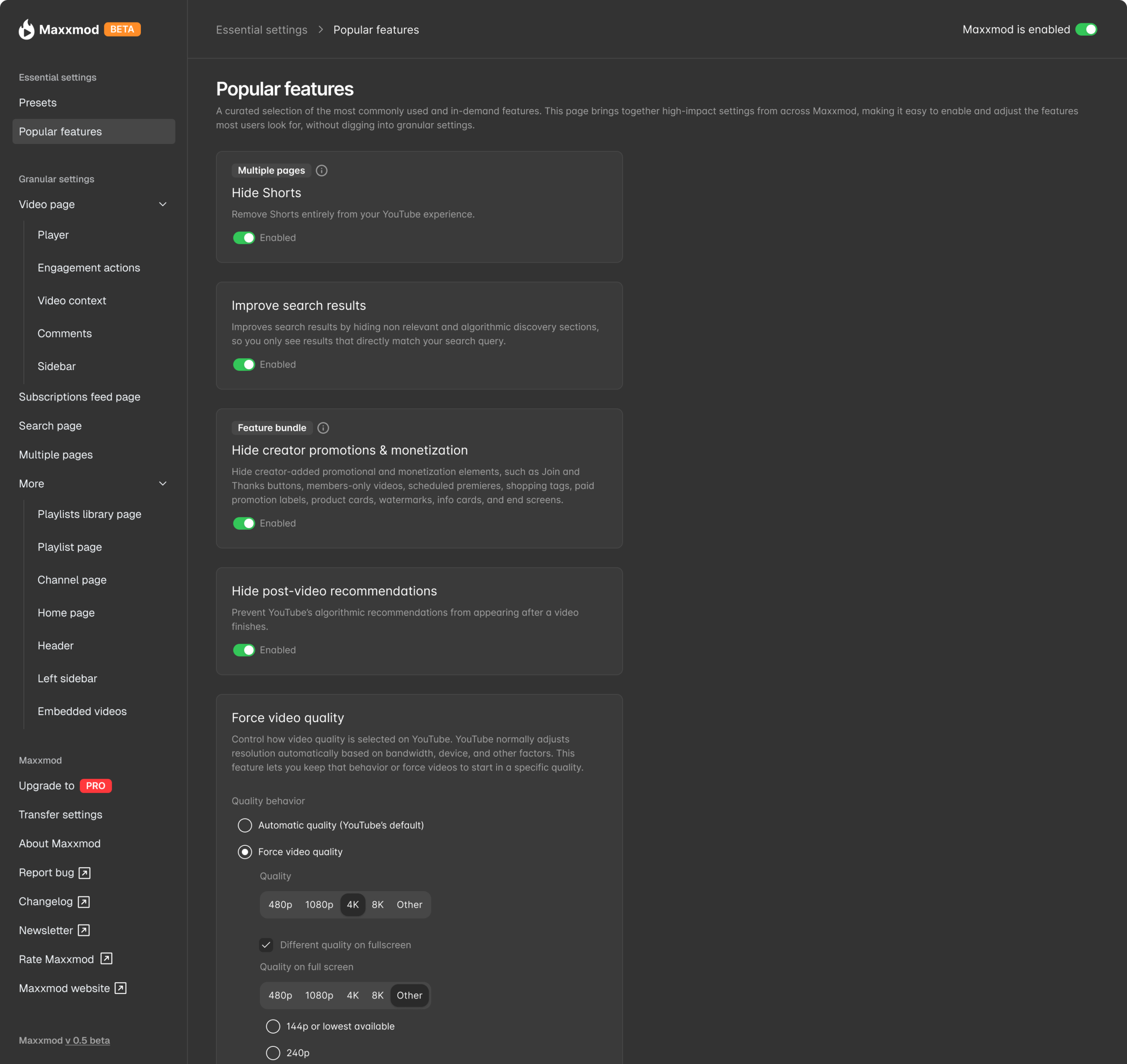
- Create a structured admin panel instead of long settings lists
- Group features by interface areas instead of feature type
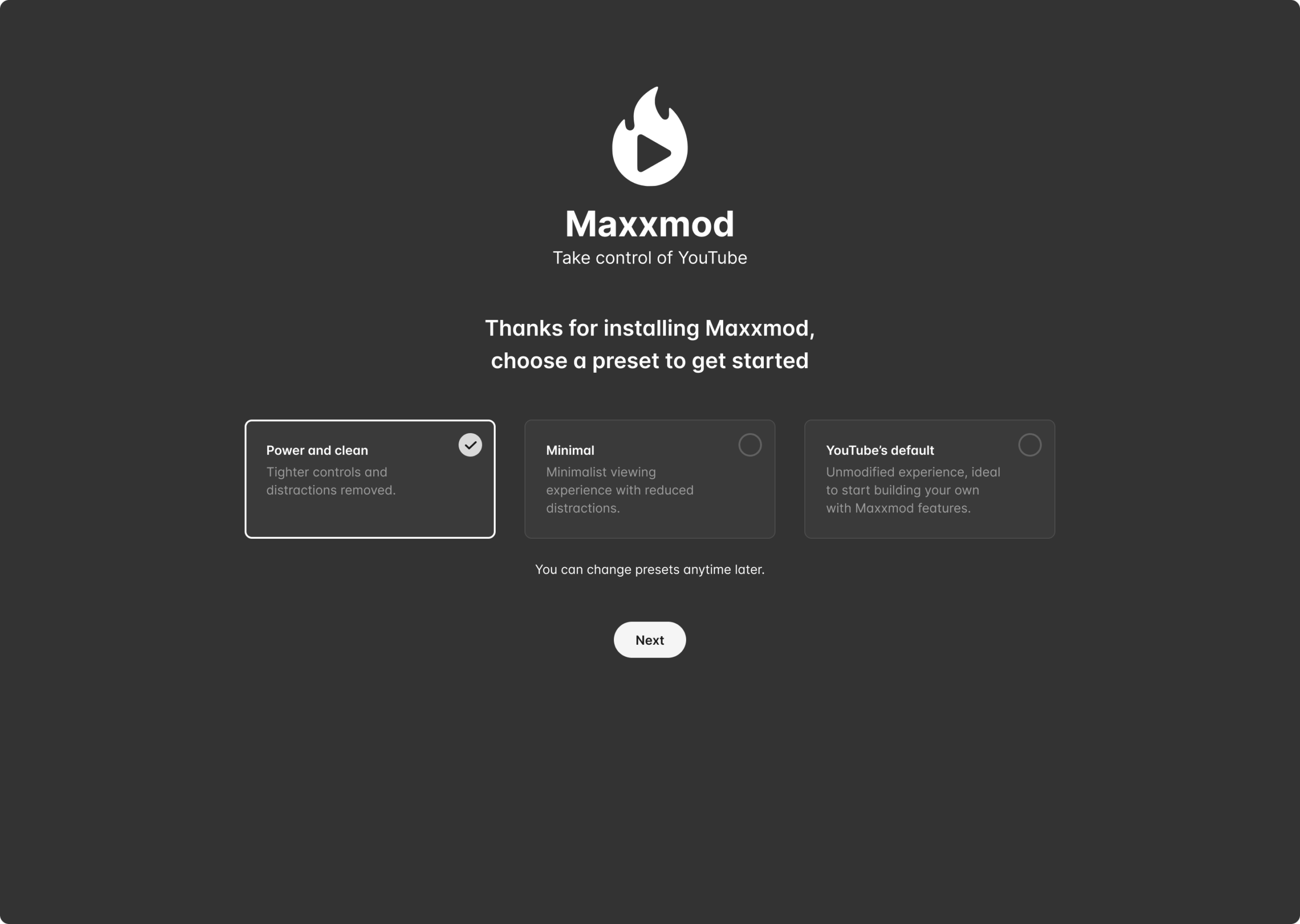
- Introduce feature presets to give users a useful starting point instead of forcing full manual configuration
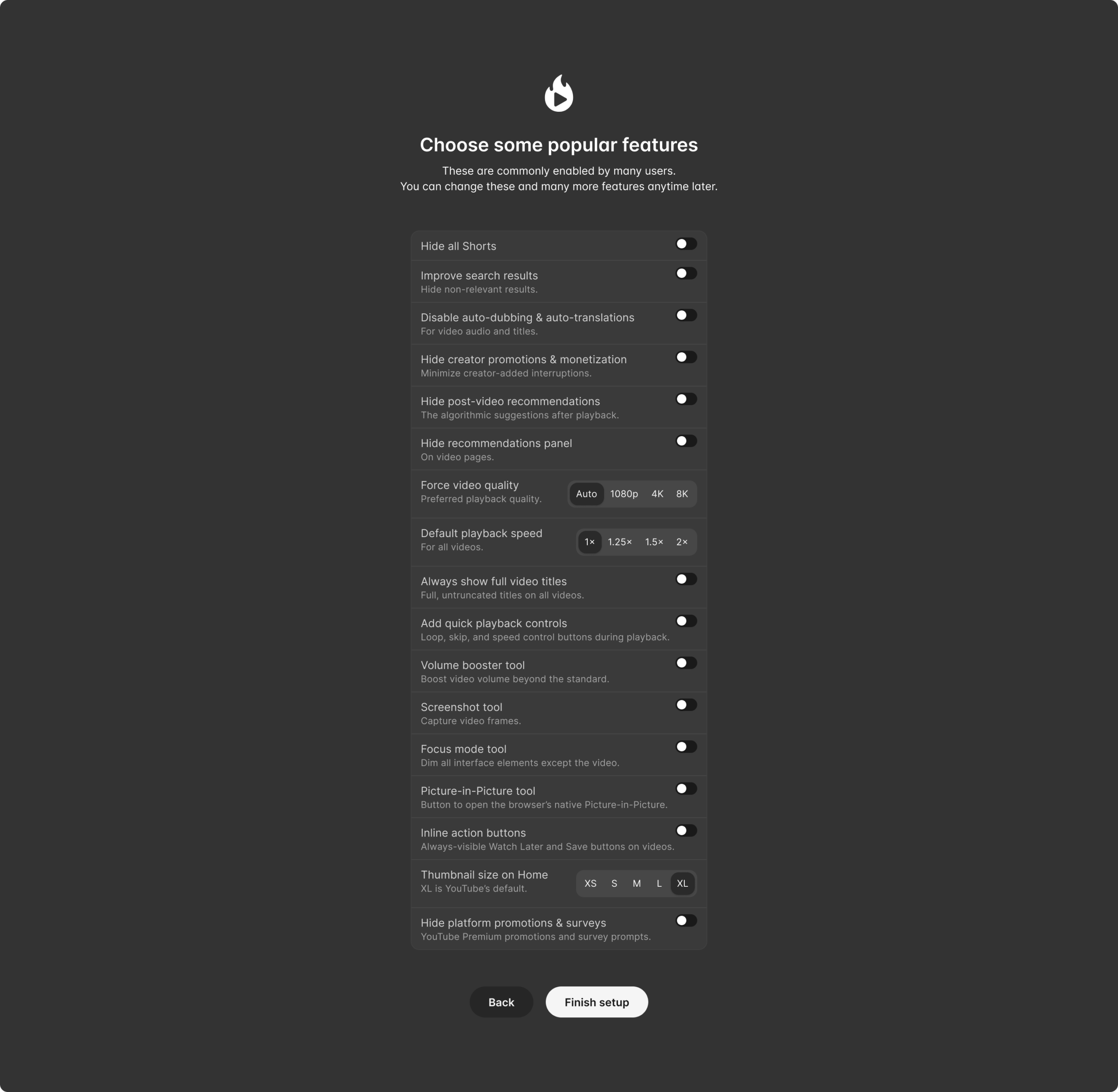
- Add a “popular features” panel to centralize the most demanded controls identified during research
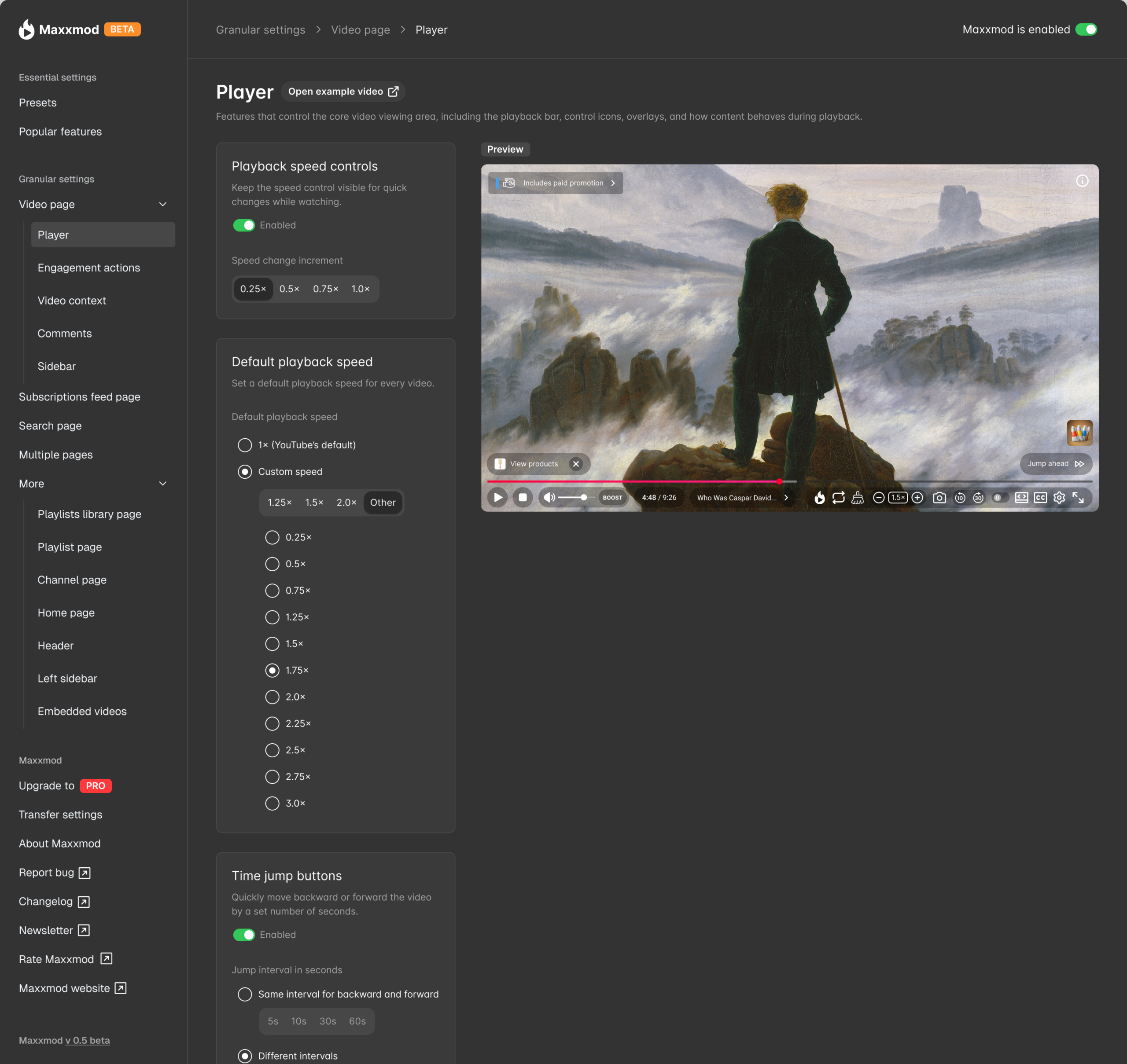
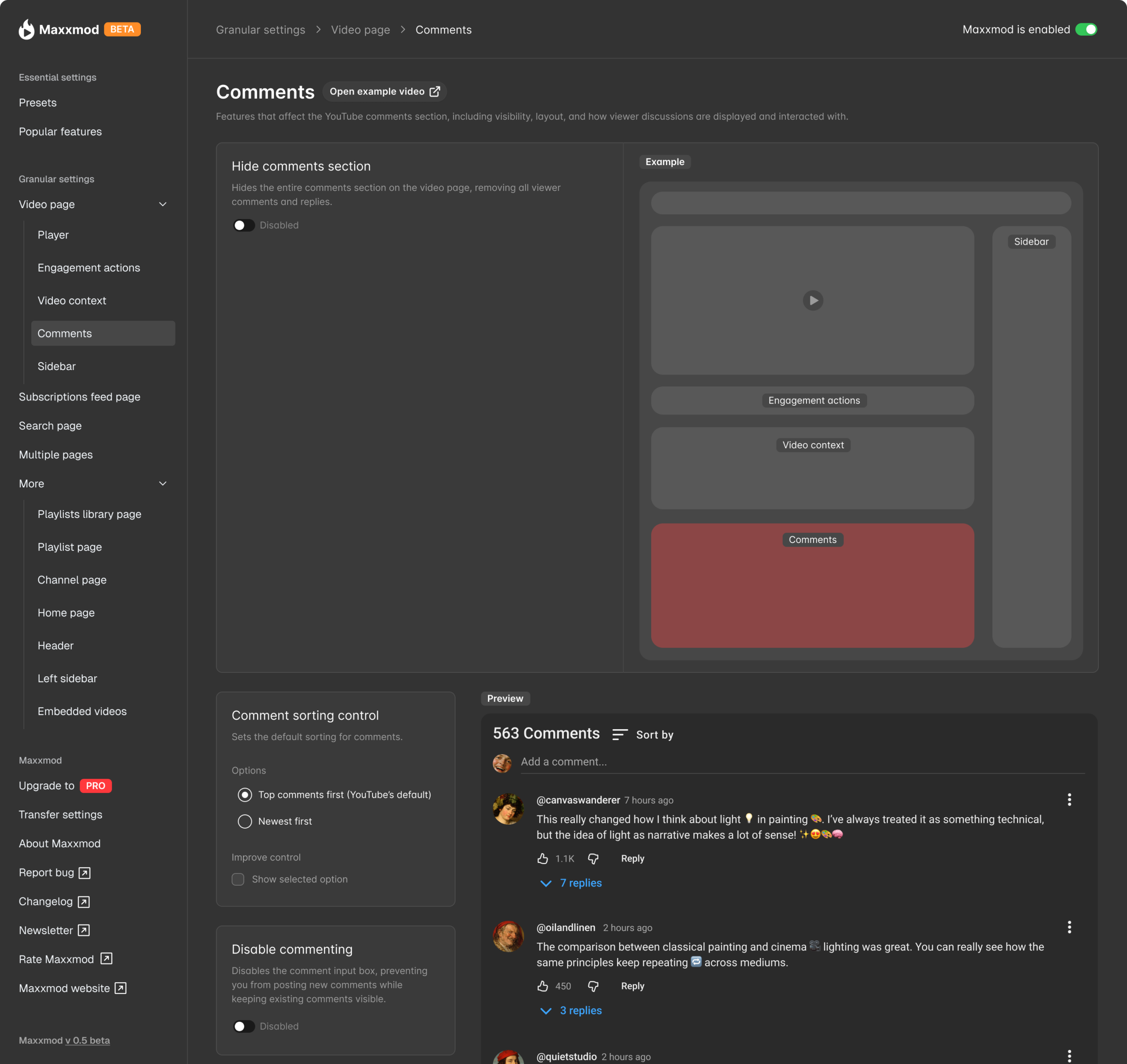
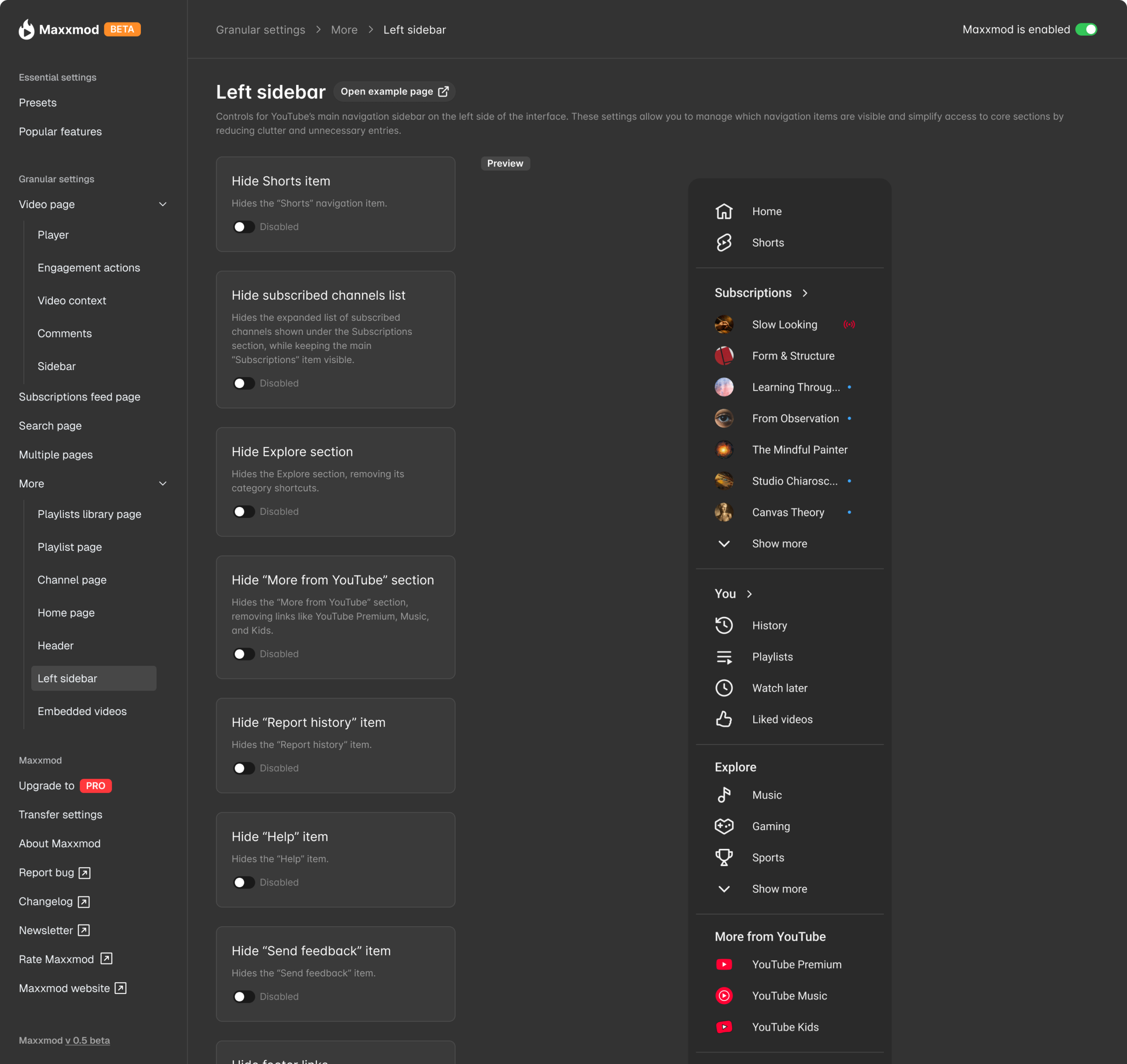
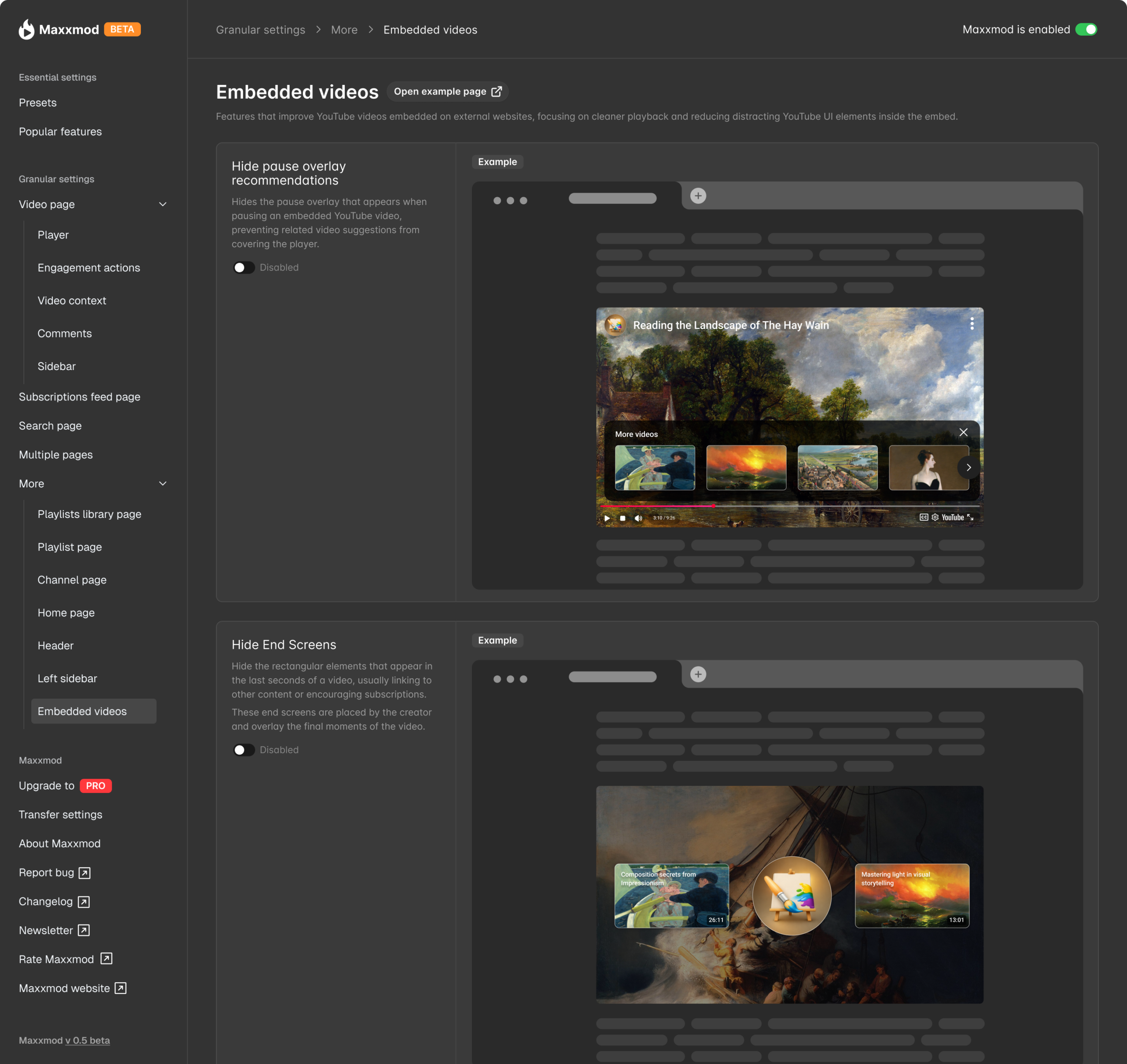
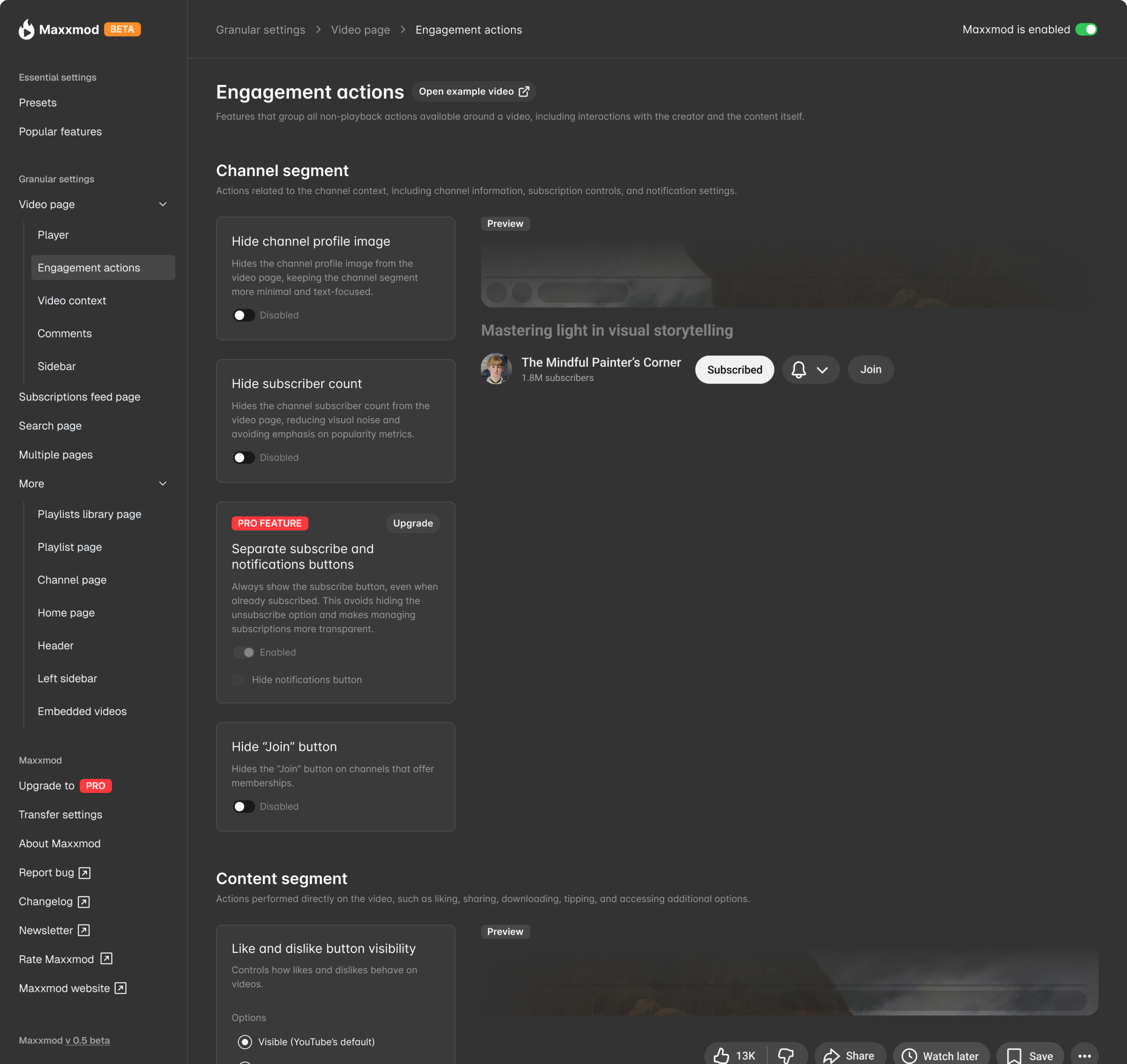
- Use real UI previews and detailed copy to explain each feature
Feature definition
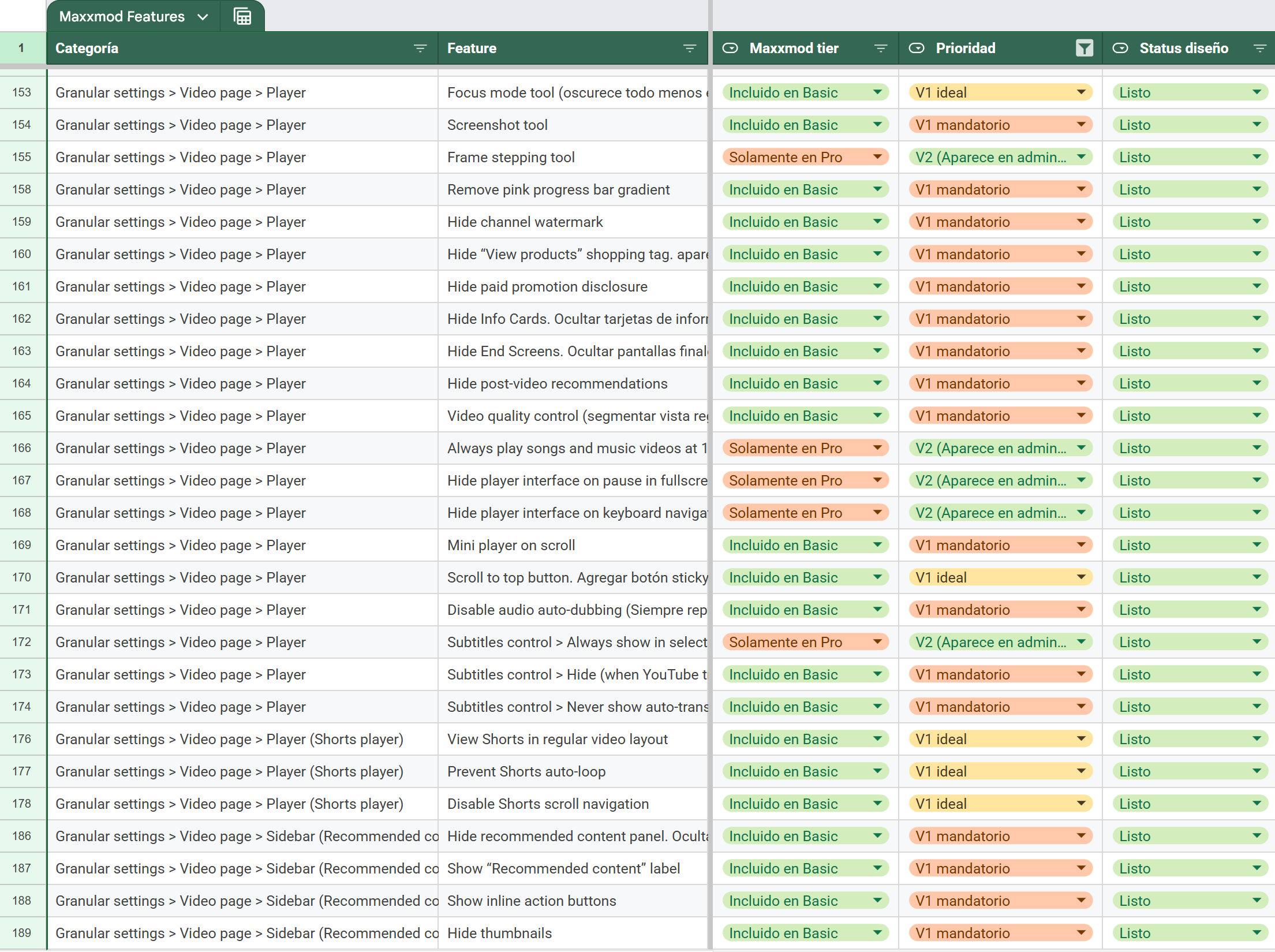
Defined and designed a feature set of 200+ controls and enhancements, including
- Removing distractions (Shorts, recommendations, panels)
- Interface customization
- Playback controls and enhancements
- Content visibility controls
- Improved interaction patterns across the player and layout
UI and design system
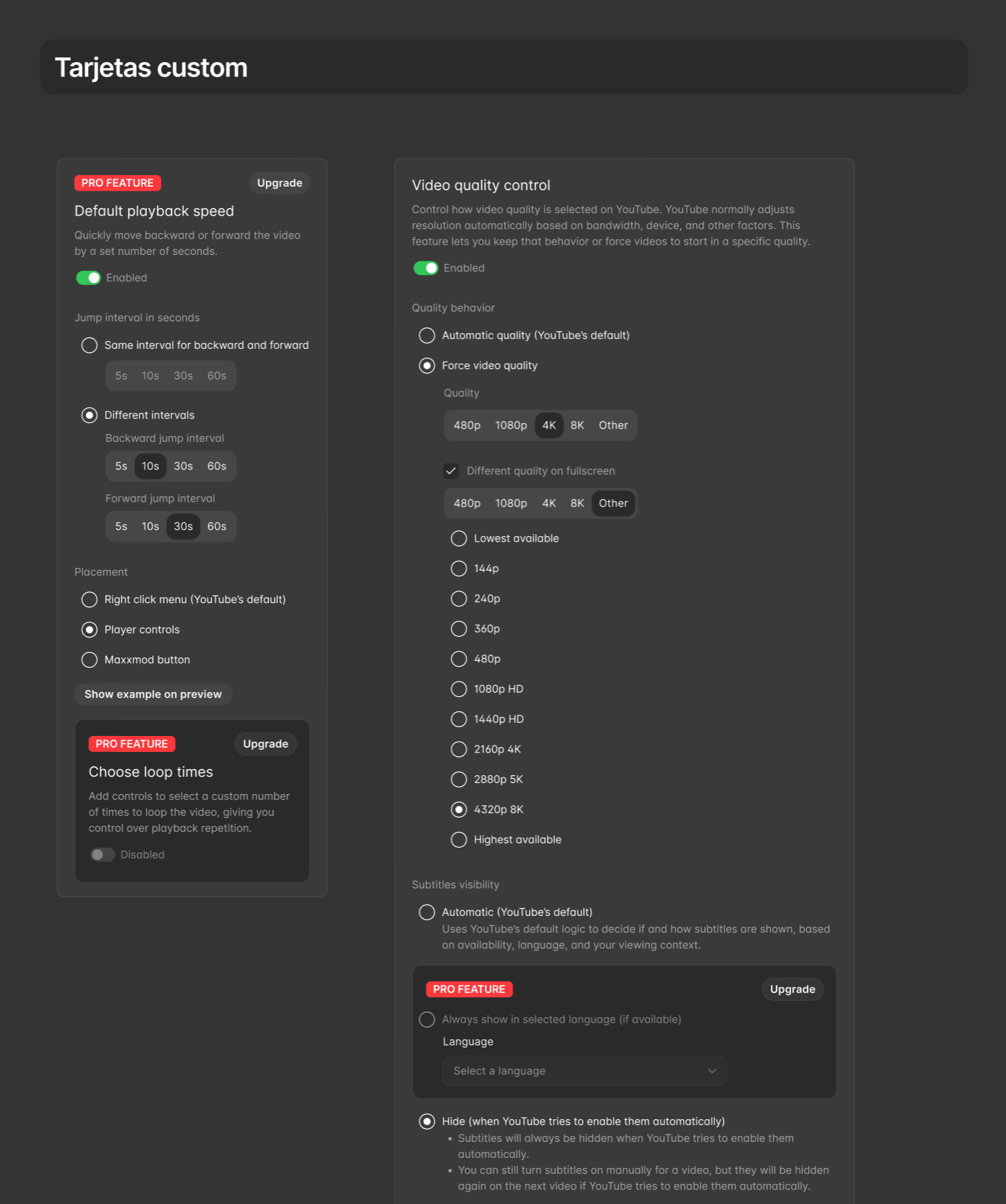
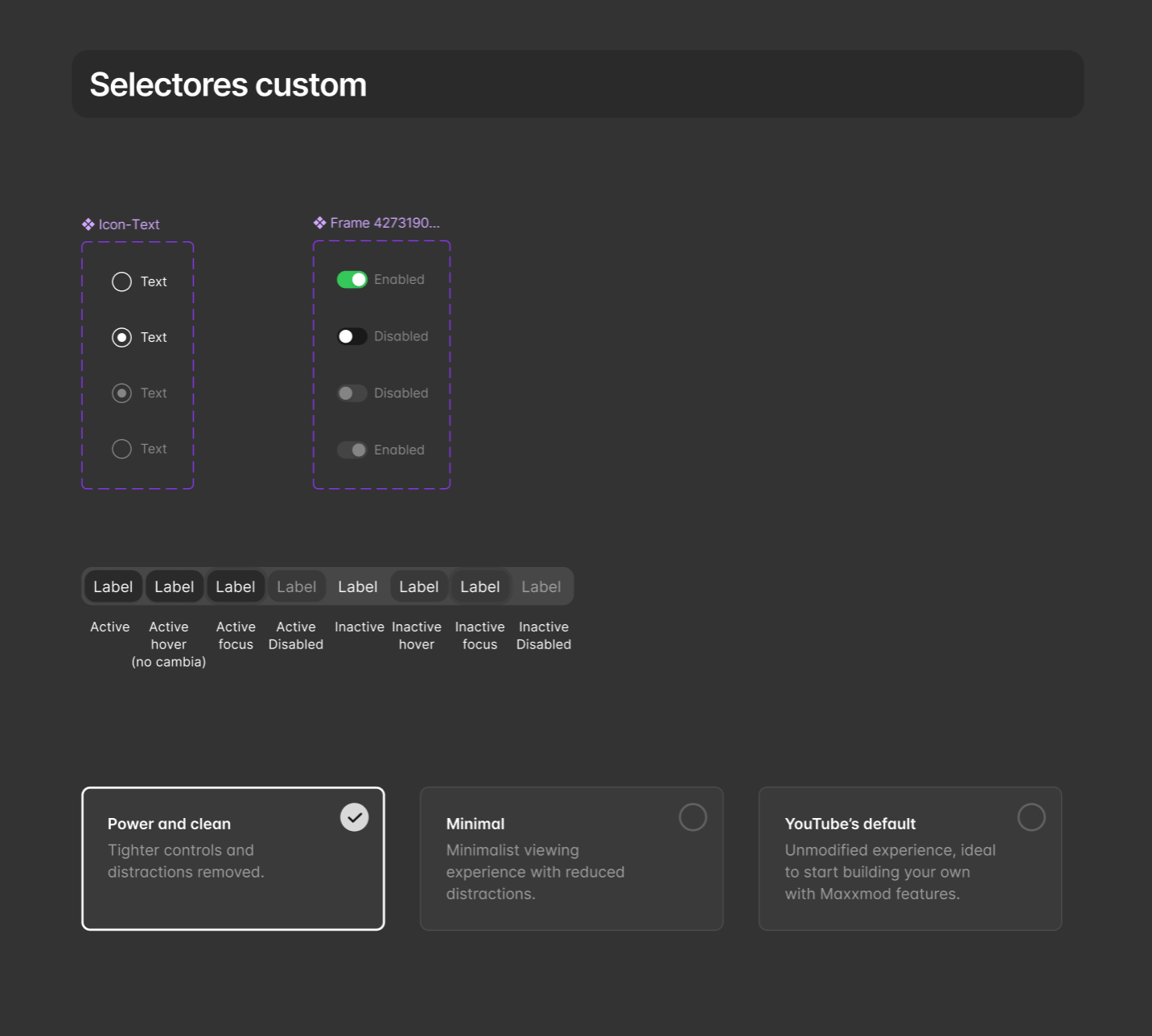
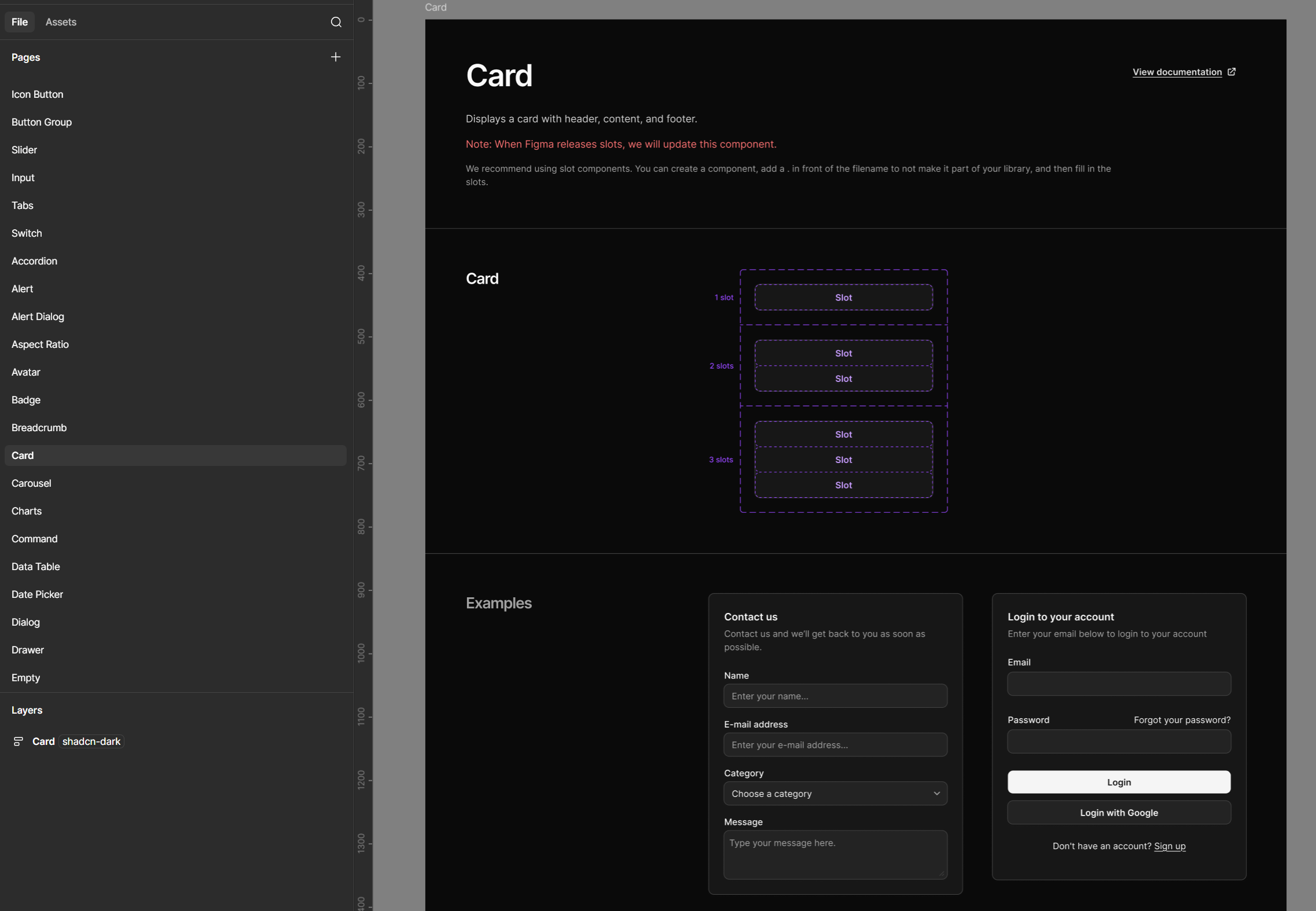
I used shadcn/ui as a base to accelerate the UI work, then extended it with custom components and visual refinements aligned with the Maxxmod brand.
Key elements included
- Layout system and spacing rules
- Component library with buttons, toggles, panels, and states
- Custom styling and patterns to move beyond a generic shadcn/ui look
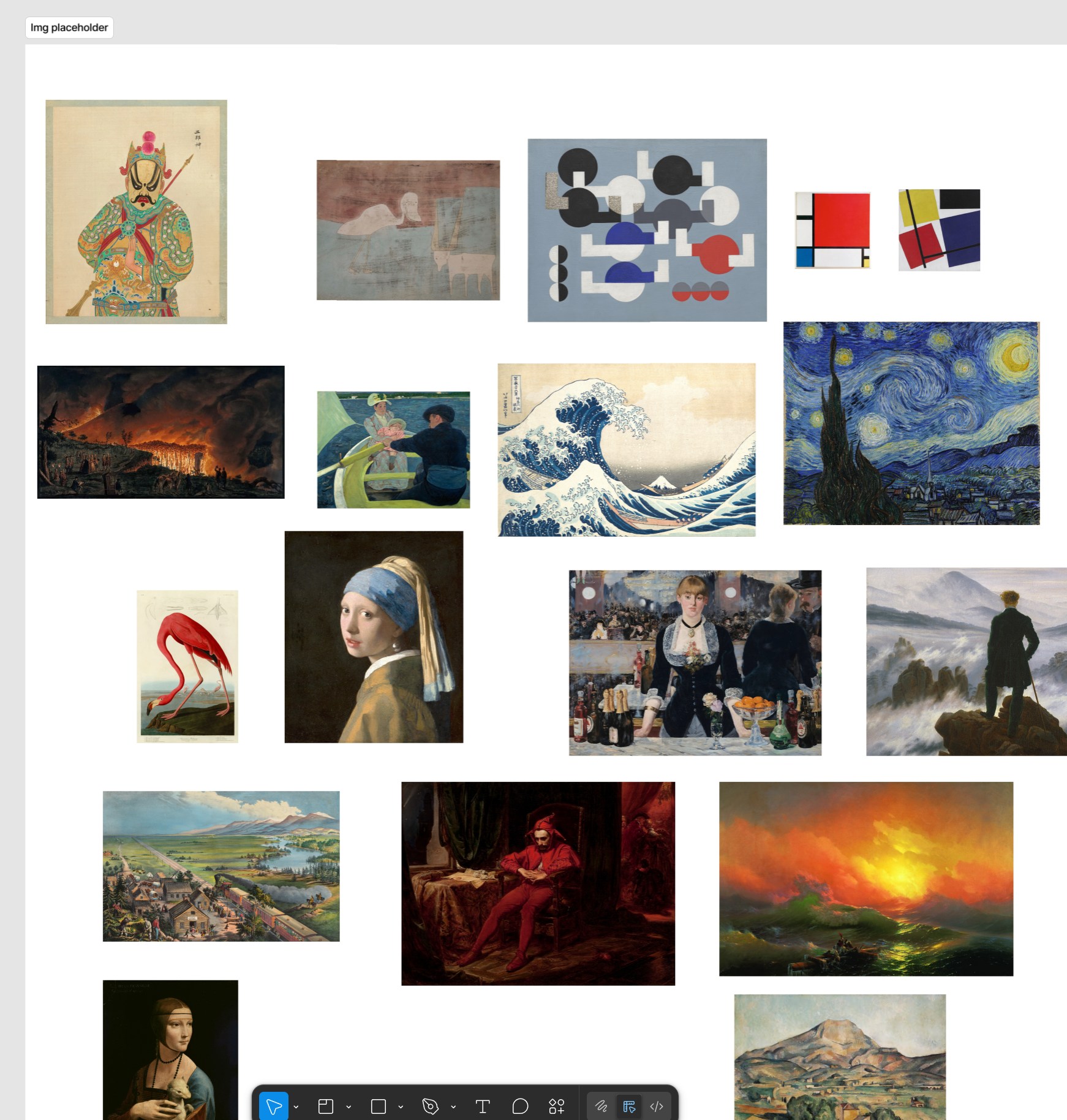
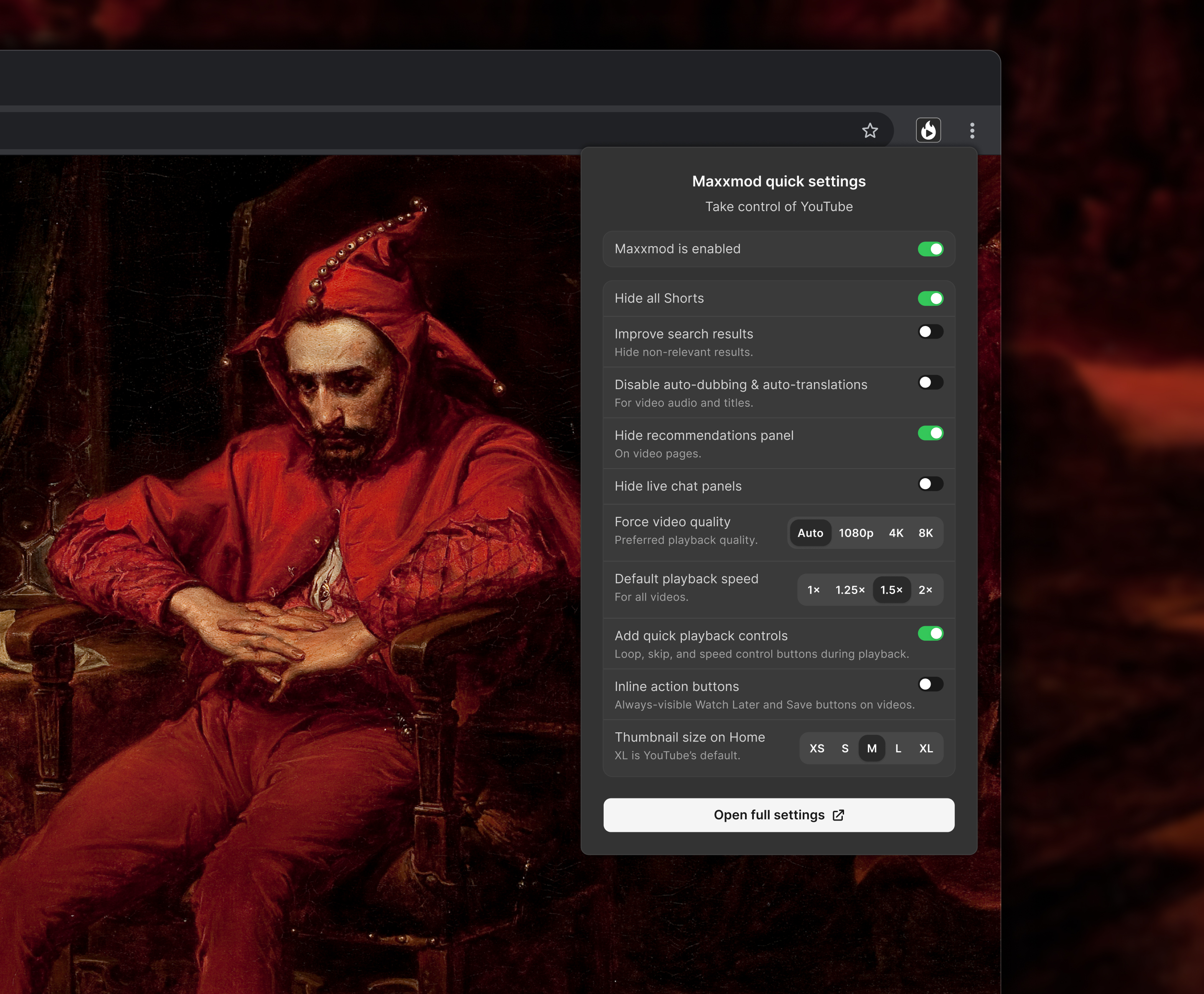
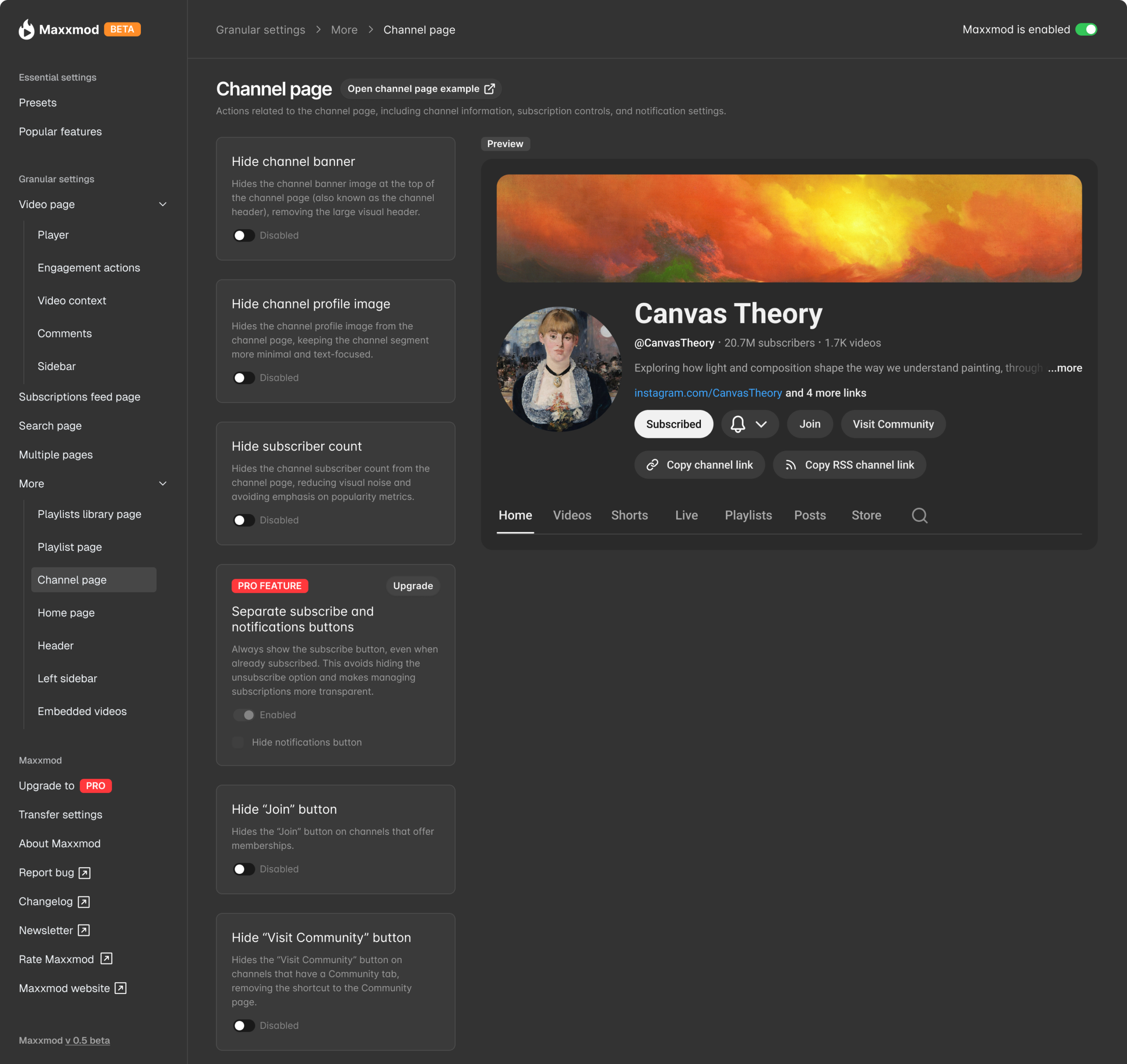
I also introduced paintings into the interface to give the product more personality. As someone who appreciates painting, this helped make Maxxmod feel more distinctive and less generic.
Screens and flows
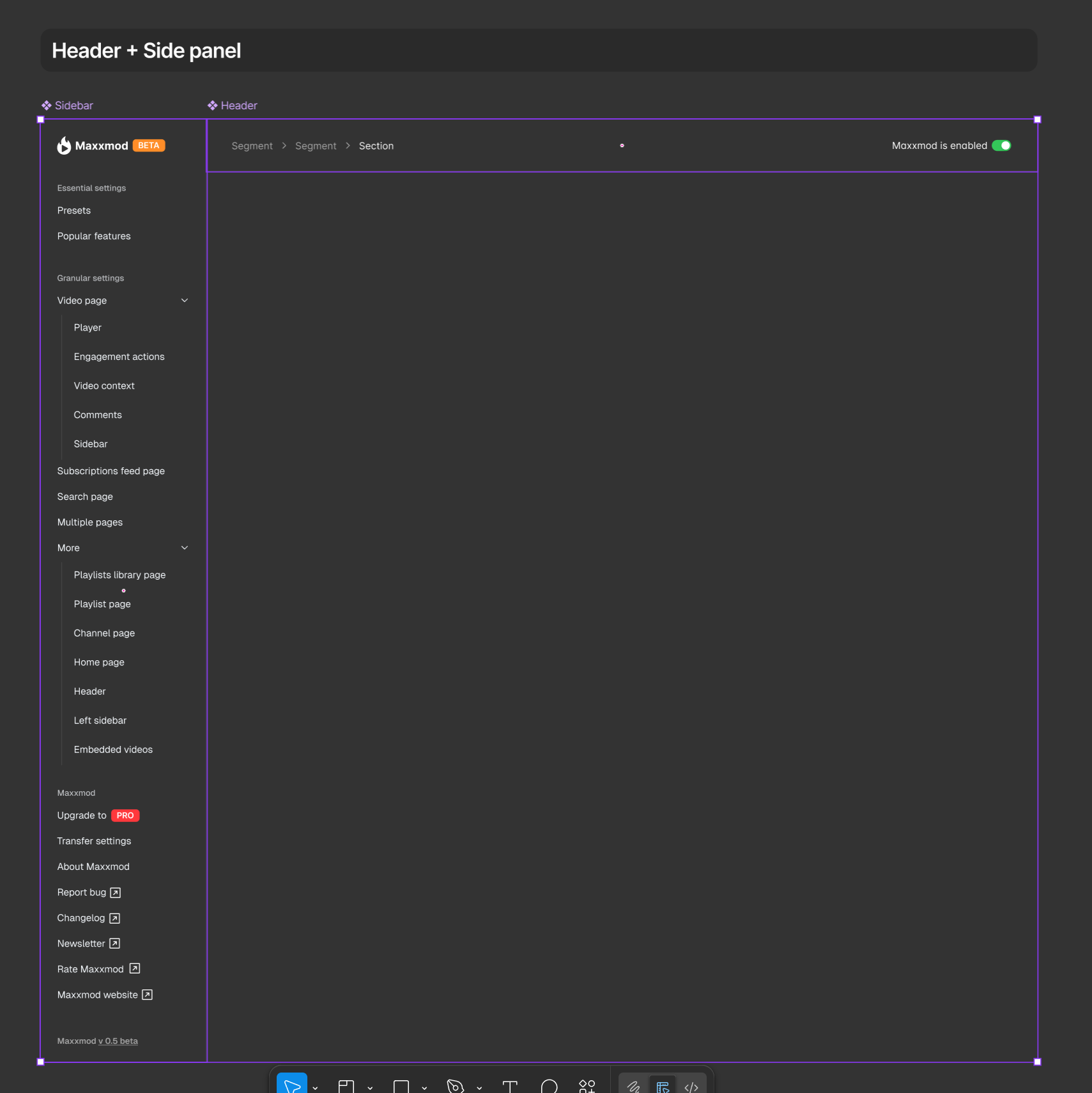
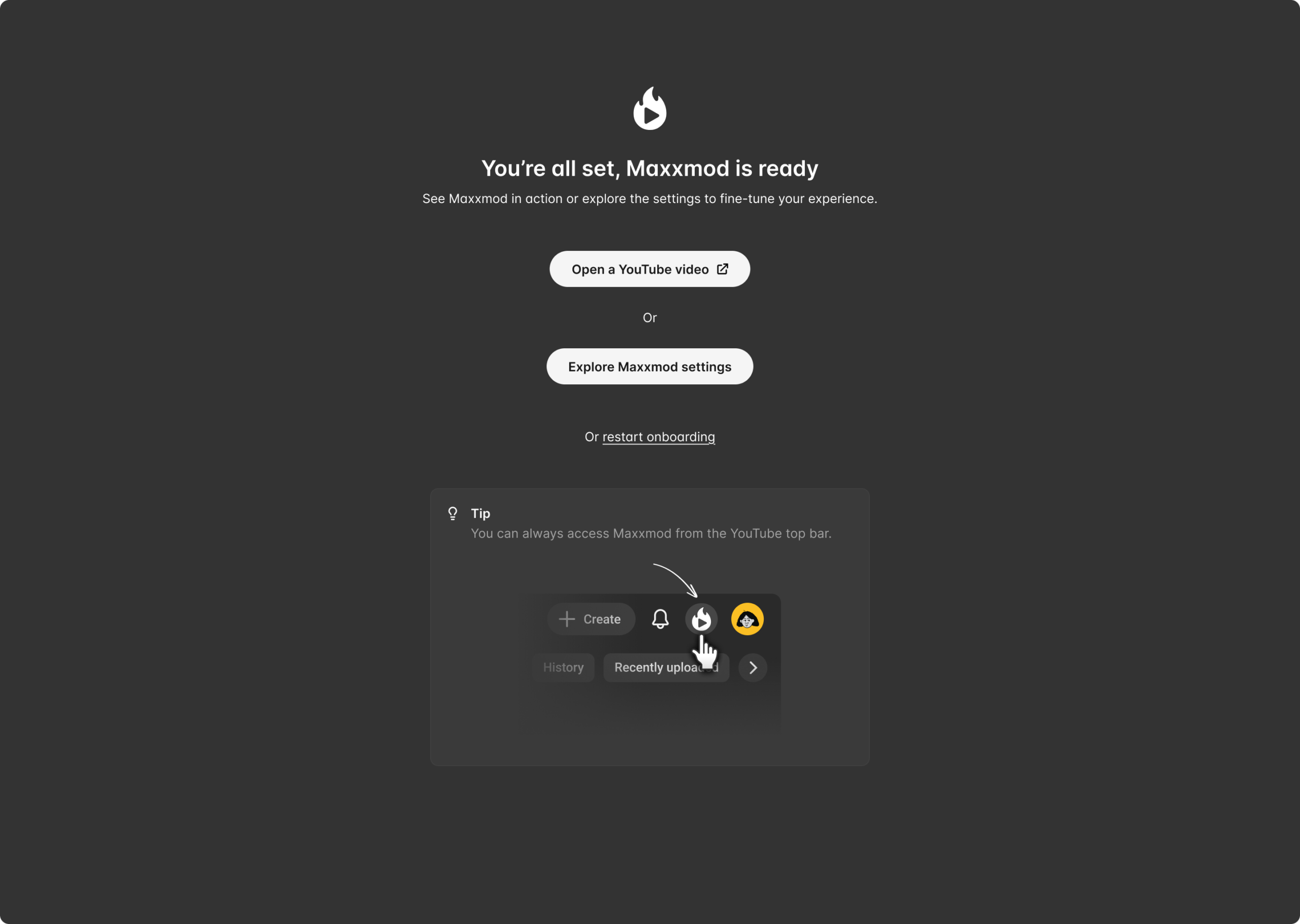
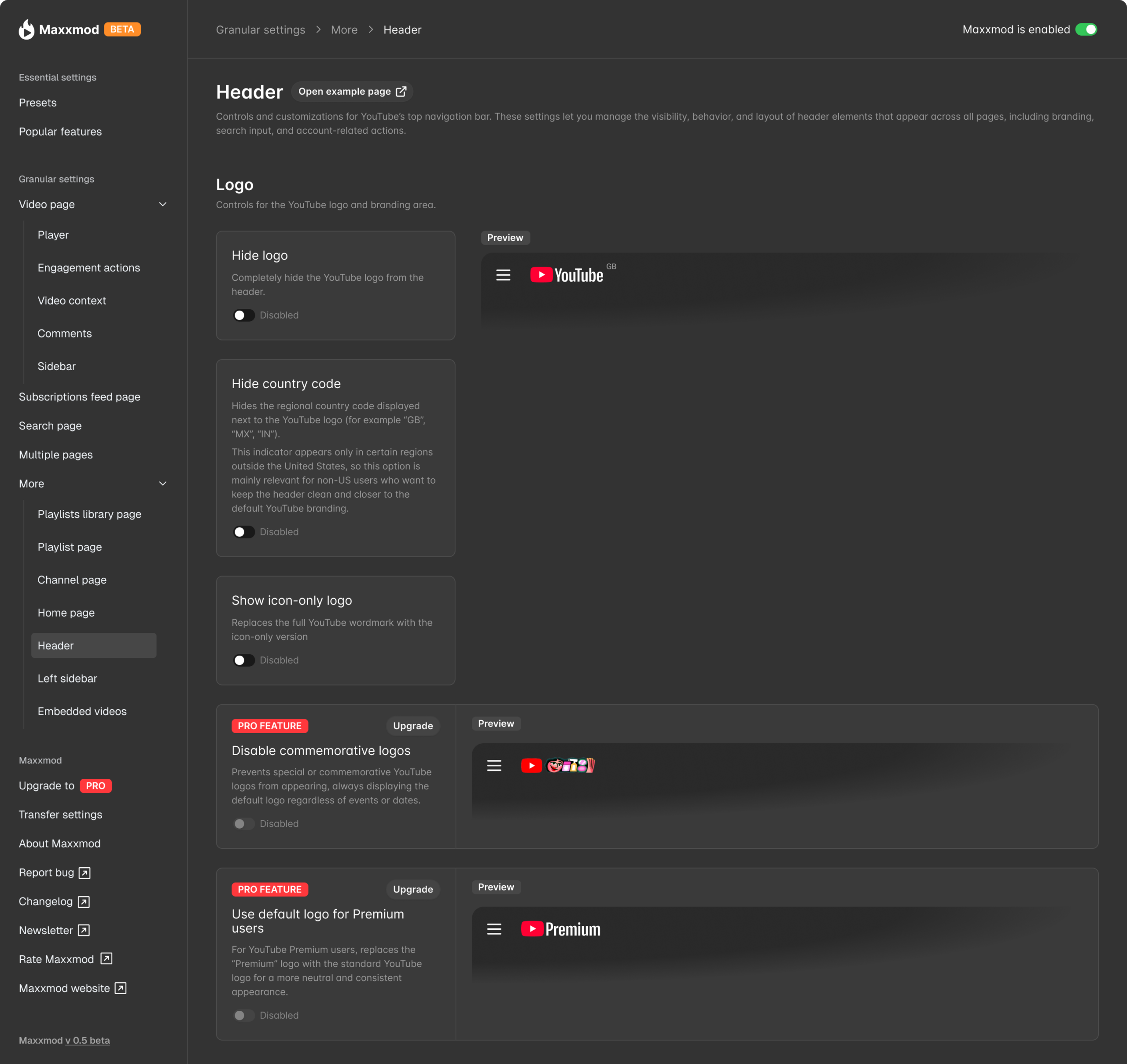
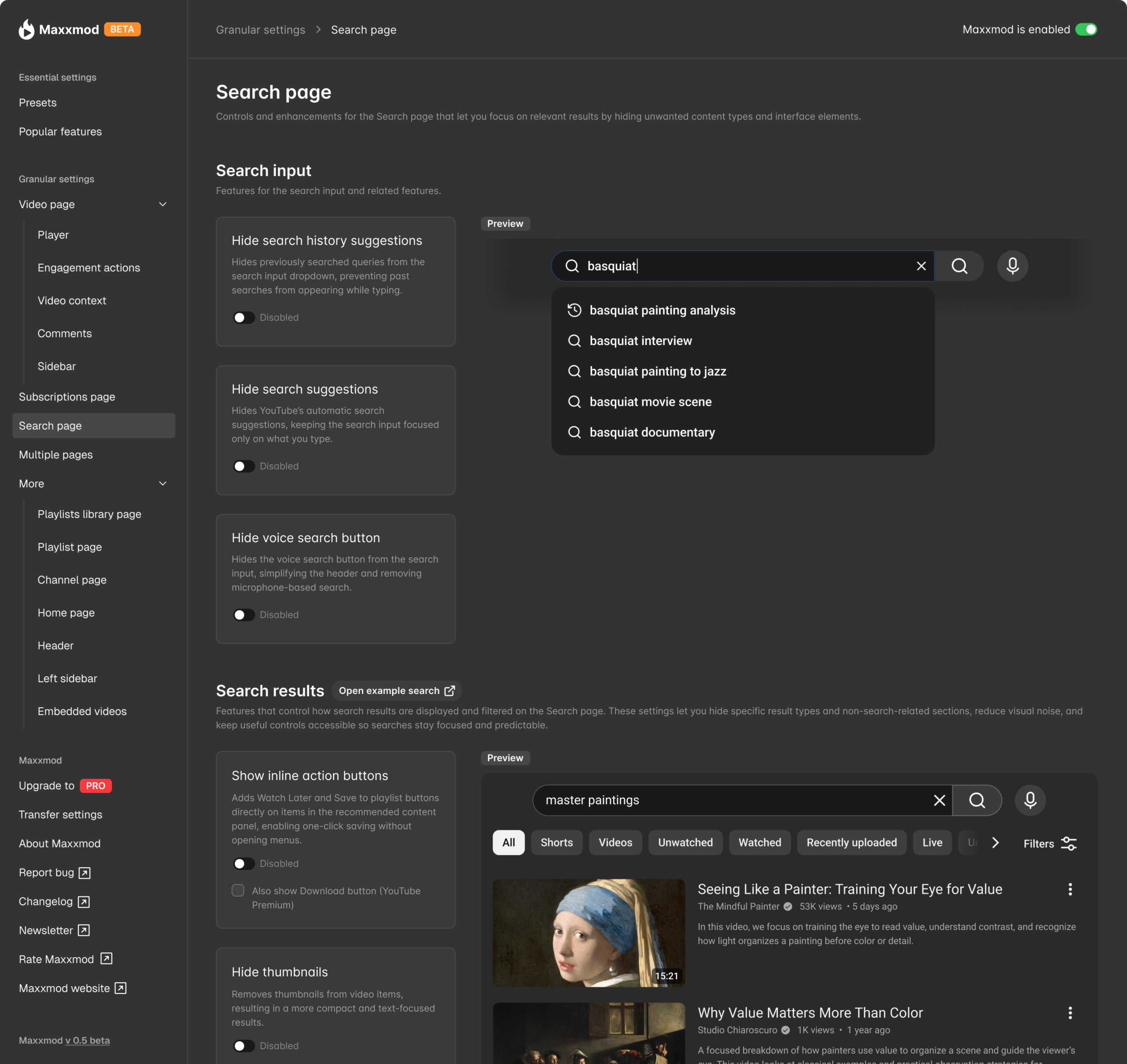
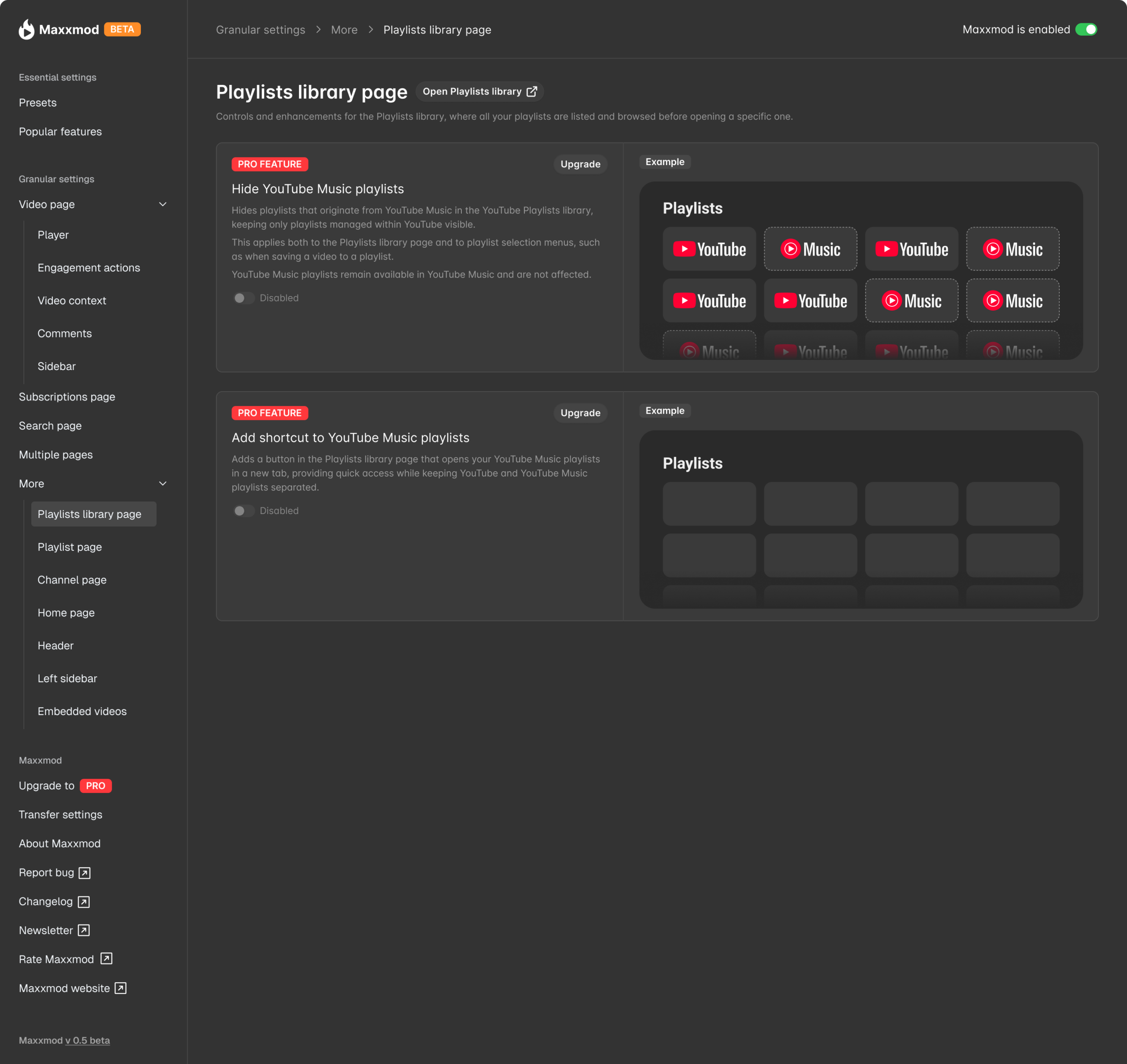
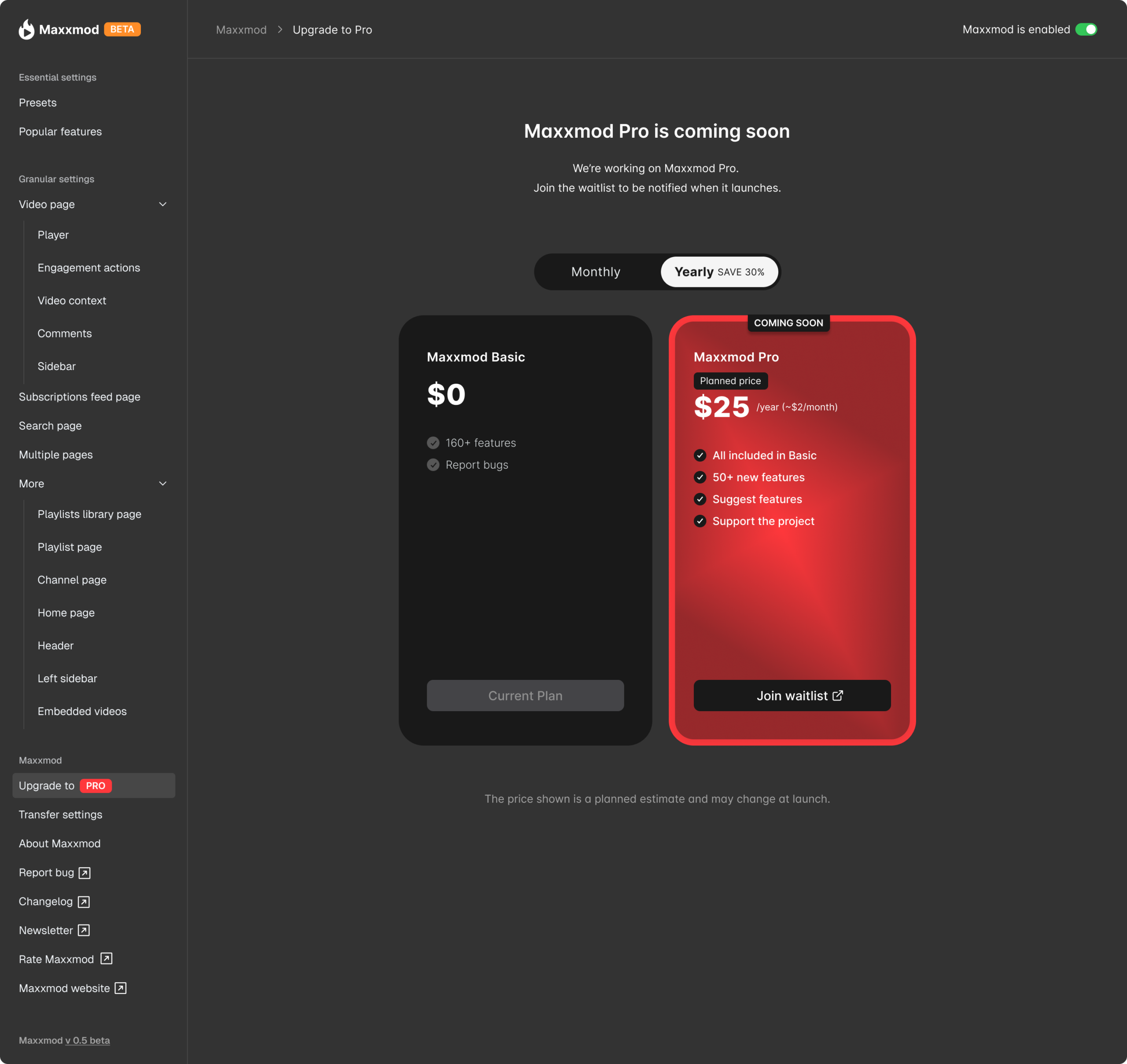
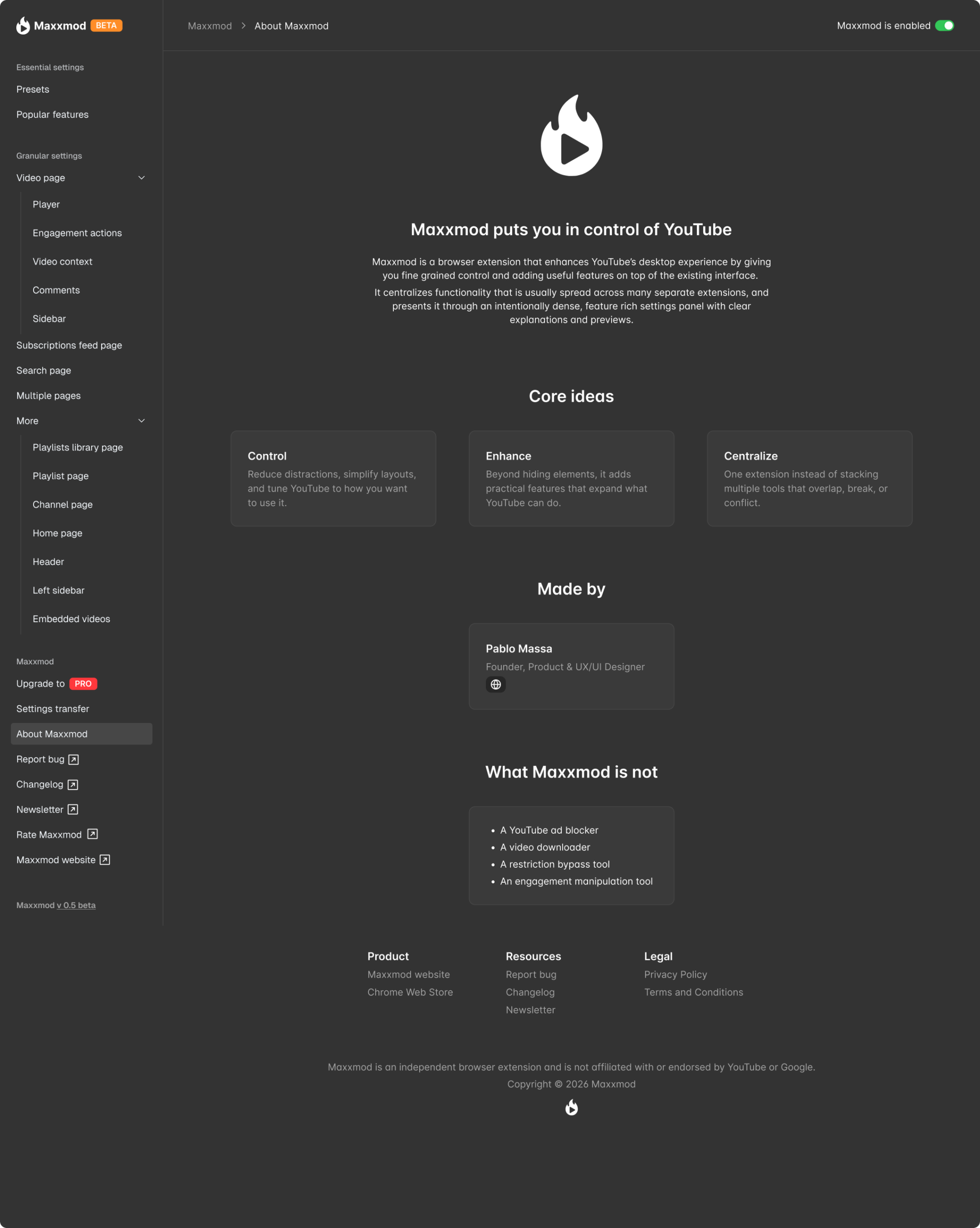
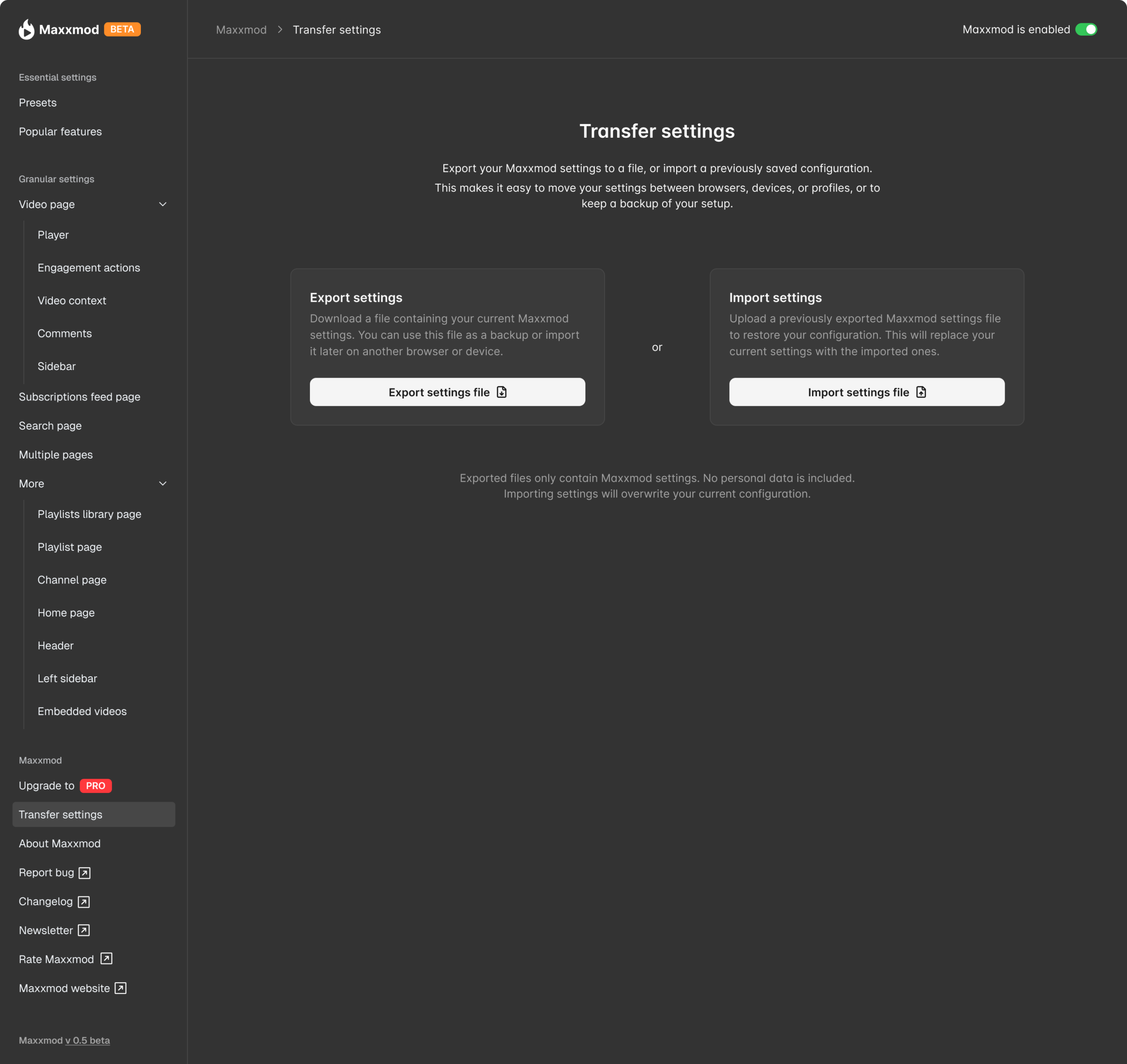
Designed 40+ high fidelity screens in Figma using the design system.
The work covered
- Onboarding flow
- Admin panel navigation
- Feature configuration
- UI previews and interactions
- Quick settings popup
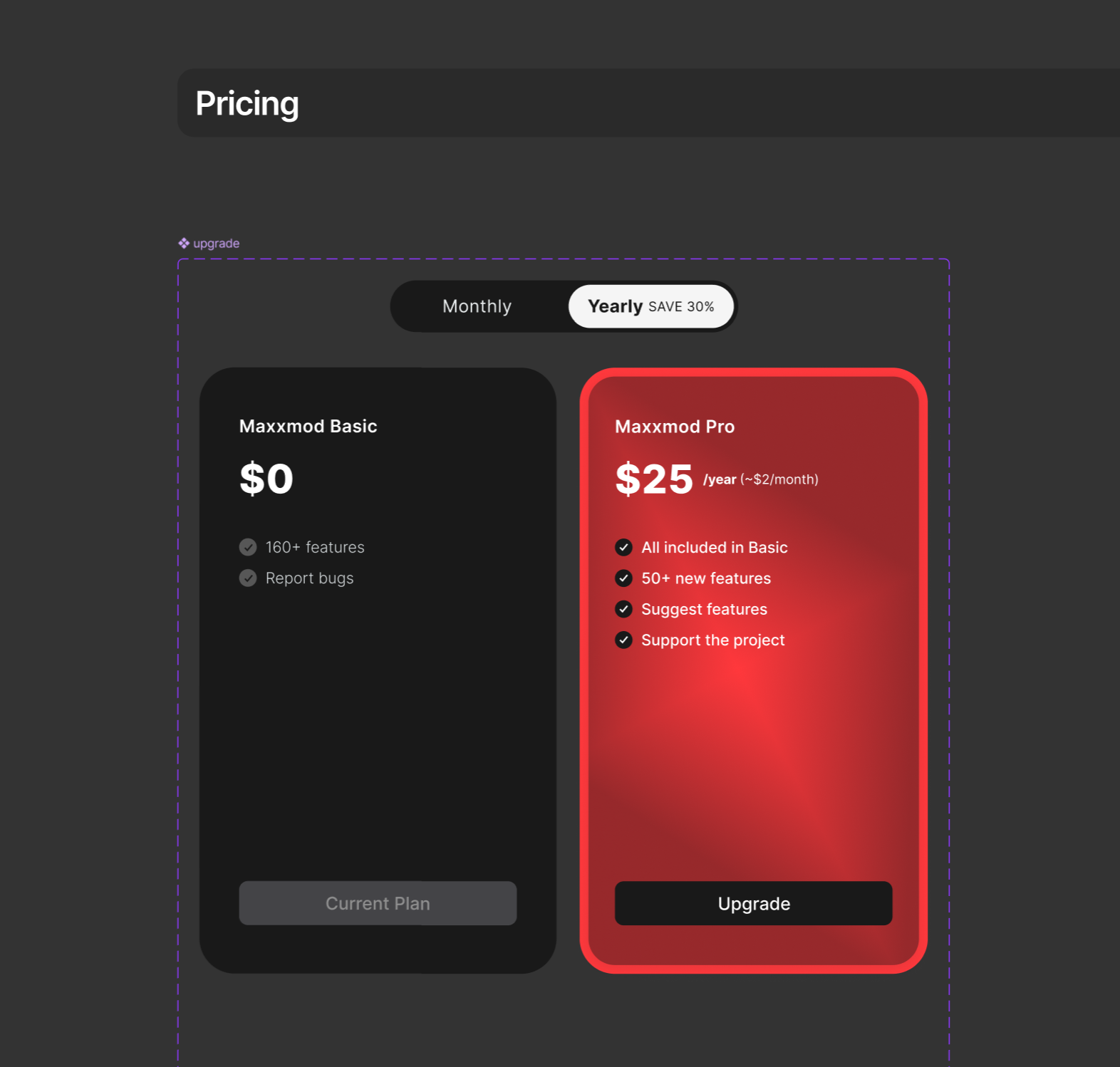
- Internal pages such as About, Pricing, and Transfer Settings

Development
Initially, I explored building the extension using AI tools, including Claude Code and Codex. I was able to generate partial implementations, but at that stage I couldn’t turn them into a stable, maintainable product.
I worked with a development team from January to May 2026, but that collaboration ended before the product was completed. In September 2026, I resumed development with Codex and, within two weeks, completed and launched Maxxmod 1.0.
The Maxxmod 1.0 demo and journey video covers this final stage in more detail, including the development process with Codex and the launch.
Tech stack
- Manifest V3 for Chrome Extensions as the foundation for extension structure, permissions, and browser compatibility
- React + TypeScript for the UI and application logic
- Vite for build and development workflow
- Chrome Extension APIs for browser integration and storage
- Content scripts for real time UI modification on YouTube



The architecture is modular, supporting scalability and future feature expansion.
Open to feedback
I’m open to feedback, ideas, and suggestions as Maxxmod continues to evolve, from the experience of using the extension to its design, product direction, positioning, and business model.
Learnings
Building my first product provided insights beyond design execution:
- Product thinking goes beyond UX, it requires defining scope, tradeoffs, and long term direction
- A strong UX vision is a key differentiator in crowded, low quality ecosystems
- Building with AI requires craft, taste, and vision, alongside clear requirements, careful review, testing, and iteration. These were essential to turning generated code into a product I could launch
- Feature abundance without structure leads to poor usability
- Designing systems is critical when dealing with complex, scalable products
- Building independently requires navigating uncertainty across design, business, and execution
Closing
Whether Maxxmod succeeds or not, building and launching it has already expanded my skills as a product designer, builder, and in business decision-making.
It has allowed me to move from designer to builder, creating and owning a product end to end, and gaining experiences I likely wouldn’t have had in client work.
Thanks for reading
Note
My English level is Upper Intermediate. This case study was written with assistance from ChatGPT for proofreading, wording, and sentence structure.